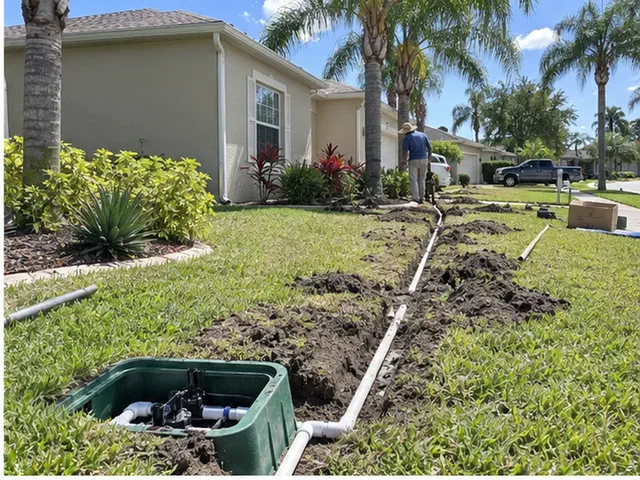
What the Work Involves
We measure the watering areas, check the available flow and pressure, and divide turf and planting beds into zones that can run evenly. Pipe routes avoid driveways where possible. Valves stay accessible in boxes, heads are set to the finished grade, and the controller is labeled so you know which area each station runs.
What You Get
- Zones planned around available flow
- Turf and planting beds separated where practical
- Controller labeled and demonstrated at completion
Signs You Need This
- New construction has no irrigation
- A pool or patio changed the old layout
- New sod extends beyond the current coverage
- The old system has too many abandoned repairs
Flow Comes Before the Head Count
We measure how much water the supply can deliver before laying out zones. If a line can support six heads at the needed pressure, putting ten on it will leave the far side weak no matter how good the controller is. The zone plan starts with that number.
Turf, shrubs, and drip areas use water differently. Keeping them separate gives the controller a chance to water each area without drowning another one.
Working Around Pools and Hardscape
Pools, screen enclosures, paver drives, and patios break a yard into smaller watering areas. We route around finished surfaces when there is a reasonable path and use narrow-pattern or drip components where a wide spray would hit the enclosure or deck.
If hardscape blocks the only route, we explain the crossing before work starts. We do not promise invisible trenching through a finished yard.