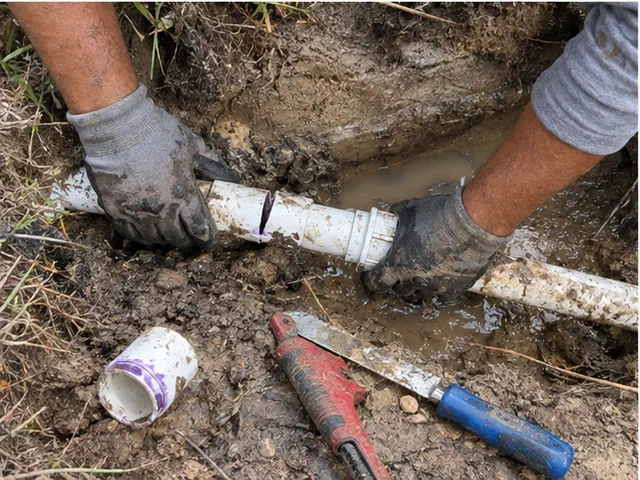
What the Work Involves
We isolate the leaking zone, shut the water down, and uncover enough pipe to see sound material on both sides of the break. The damaged section gets cut out and rebuilt with irrigation-rated fittings. We let the joints set before pressurizing the line, then run the zone and watch the repair under pressure before the hole is closed.
What You Get
- The break exposed far enough to make a solid repair
- Pipe and fittings matched to the existing system
- The repaired zone pressure-tested before backfill
Signs You Need This
- A wet patch remains after several dry days
- Water bubbles up only when one zone runs
- A valve box stays flooded
- Heads on one zone barely rise
Finding an Underground Break
We start with the zone that loses pressure and walk its likely pipe route. Soft ground, a greener strip, sand washing out near a curb, or a head that keeps sinking can narrow it down. We do not start trenching across the yard just because water surfaced in one spot.
If roots have pushed a fitting apart, we expose enough room to route the new piece without forcing it back against the root. A repair under constant side pressure usually breaks again.
Damage Near Driveways and Walks
Heads and lines along concrete edges take more abuse from tires, edgers, and settling soil. If the break is right against a slab, we may move the head a few inches and use a flexible connection so the next bump does not crack the same rigid fitting.
We will tell you when pavers or concrete block access. Lifting and resetting a few pavers can be part of the scope. Cutting a driveway is a different trade and is not hidden inside a sprinkler quote.