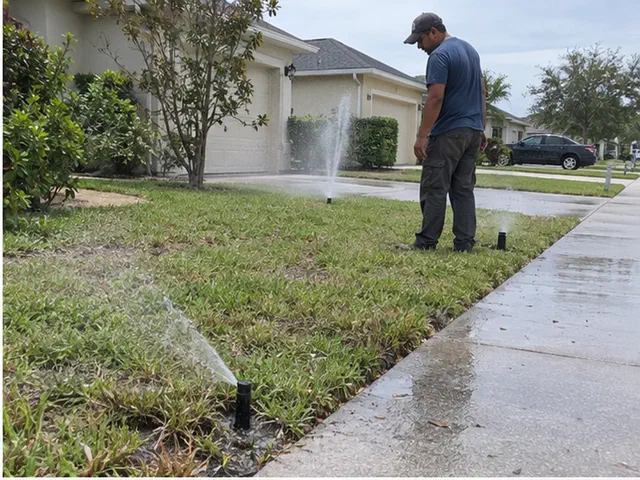
What the Work Involves
We run every zone and watch what it does. A zone that will not start can be a controller setting, a bad solenoid, broken field wire, or a valve that is stuck shut. Low pressure can come from a split line, too many heads on one zone, or a nozzle that does not match the rest. We find which part failed, explain it, and repair that part before we start replacing anything else.
What You Get
- Every zone tested before the repair is quoted
- The failed part identified instead of guessed at
- Coverage checked again before we leave
Signs You Need This
- One zone never turns on
- Dry strips show up between working heads
- The pump or controller runs but nothing waters
- Your water use jumped without a change in schedule
Why We Run Every Zone
The wet spot is not always where the break is. Water follows loose backfill and can surface several feet from a split pipe, especially in the sandy fill used around Central Florida subdivisions. We turn zones on one at a time, mark which heads belong together, and look for pressure changes before digging.
That extra ten minutes keeps us from opening the lawn in the wrong place. It also catches a second broken head or a mixed nozzle that would leave you with the same brown patch after the obvious leak was fixed.
Controllers, Valves, and Field Wiring
When the display works but a zone stays dead, we test at the controller first. If power leaves the terminal, we move to the valve box and check the solenoid and field wire. A buried splice that fills with water can work one day and fail the next.
We replace the failed connection with a waterproof splice and keep the repair inside the box when we can. If the controller itself is bad, we show you the failed output before recommending a replacement.